You Got the Images. Now You Still Have to Write the Ads.
You open the folder. Twelve images stare back at you. Nice images, probably. And now you have to write twelve separate headlines. Twelve primary texts. Match every line to every visual so the whole thing actually sounds like one campaign. It's 11 a.m. and you haven't touched the ad account yet.
That's the part the tools skip. They hand you a stack of creatives and wave goodbye. The copy — the thing the algorithm actually reads, the thing that determines who sees your ad — that's on you. So you write something. Then you rewrite it. Then you duplicate it six times and change a word. Then the Meta upload breaks and you start over.
The creative bottleneck everybody talks about isn't making images. It's the assembly. The matching. The twelve little decisions between 'finished file' and 'ad that can actually run.' That's where the afternoon goes.
A few months back I started poking around for something that would close that gap. Not just generate images and leave — but actually produce a finished ad. Image, copy, headline, description, CTA button, all written together as one thing, for the same angle, in the same pass.
What I found — or, honestly, what we built — is called Instant Image Ads. You paste your sales page URL. It reads your page, pulls your strongest selling points and every logical audience, and deals out 20 finished Facebook and Instagram ads per batch. Each one is an image and its copy, born together. Not two separate files you have to marry. One ad, complete, pushed into your own Meta account as a paused ad, ranked strongest to weakest with the reason attached.
That last part matters. You're not handed a pile to sort through. You get a ranked deck with the reasoning visible, so you know what to test first and why.
One URL. Twenty complete ads. No assembly required.

Paste your sales page URL and Instant Image Ads reads the page itself — your angles, your offer, your audience signals. Then it generates 20 ads per batch, each one an image paired with its primary text, headline, description, and CTA button written together in the same pass. Nothing to match afterward. Nothing to manually upload. The ad is the ad.
28 formats, no repeats — so the algorithm has real variety to test.
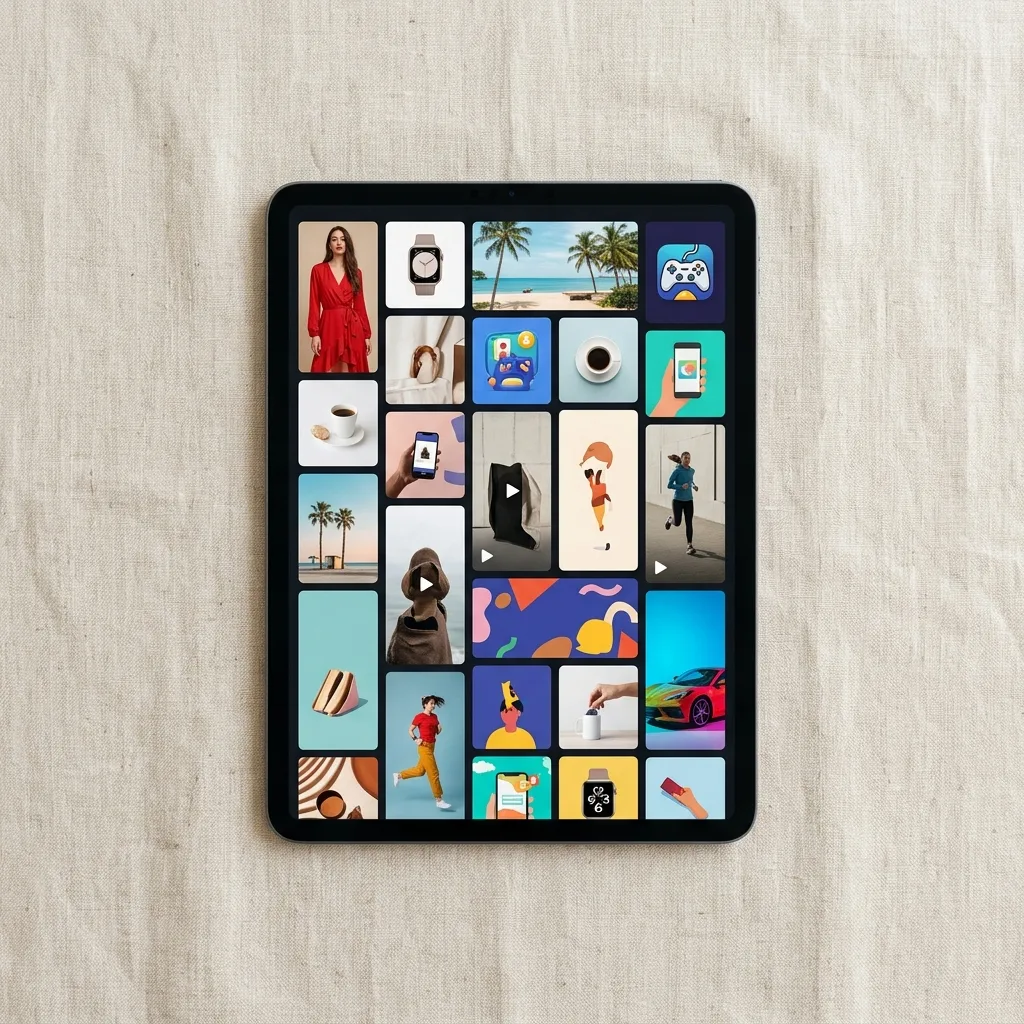
The batch deals across 28 different ad formats automatically, with no repeated formats inside a single run. That's not a vanity number — the Meta algorithm rewards creative diversity. More distinct angles means more data comes back faster. You find your winner sooner and spend less getting there.
Ranked strongest to weakest, with the reason attached.
Every batch comes back in rank order — the ads Instant Image Ads scored highest sit at the top, and each one shows the reasoning behind its position. You're not guessing what to test first. You're working down a prioritized list. That alone changes how fast you get useful data from your first spend.
Pushed into your account as paused ads — nothing runs until you say so.
Finished ads go directly into the campaign, ad set, and pixel you choose, always paused. Nothing runs overnight. Nothing surprises you. You review the deck, flip on what you want, and you're done. For anyone who's ever woken up to unexpected ad spend, this is the part that earns the trust.
Carousels built in 11 named visual styles — before a single credit is spent.
Six- and eight-slide carousels are built in 11 named visual styles, previewed as a contact sheet before anything is generated. You see the plan first. If a slide is wrong, fix it at the preview stage and no credits are charged for work you didn't want. That's a workflow decision, not a feature.